
Introduction
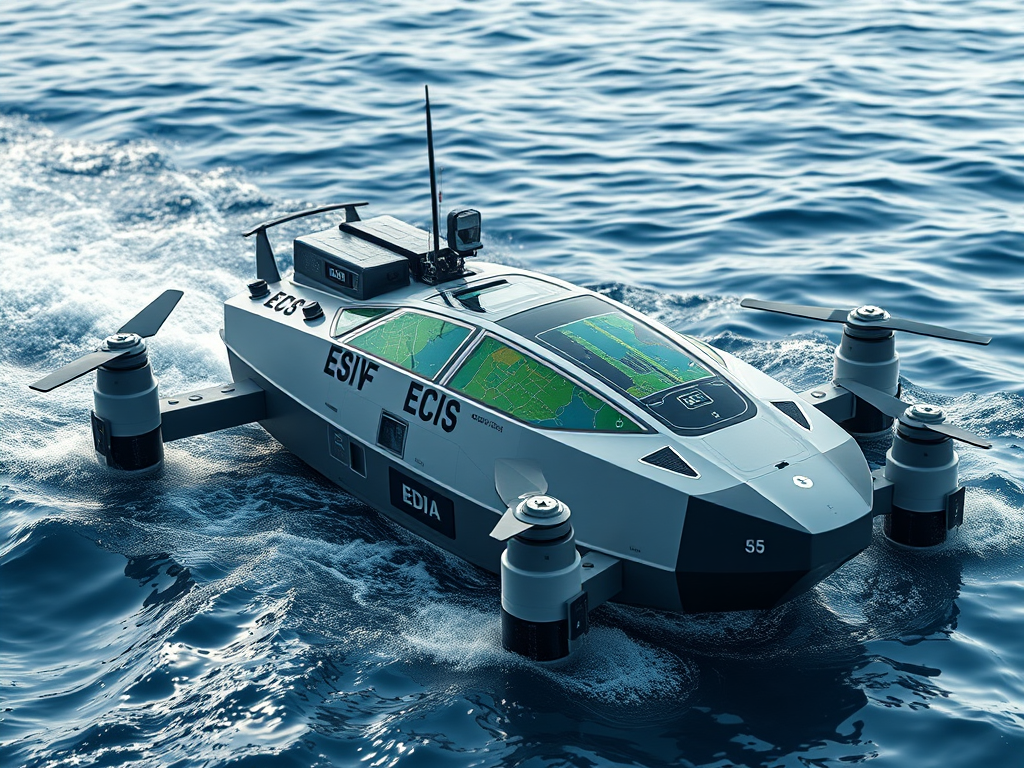
As unmanned surface vehicles (USVs) continue to revolutionize maritime operations, the integration of advanced navigation systems has become paramount. One such system is the Electronic Chart Display and Information System (ECDIS), which provides comprehensive navigational data. This article explores the protocols and methodologies for handling ECDIS data to build robust software for USV applications.
Understanding ECDIS
ECDIS is a digital navigation system that integrates various data sources, including electronic navigational charts (ENCs), GPS, radar, and AIS (Automatic Identification System). It aids mariners in route planning, monitoring, and managing maritime operations, making it an invaluable tool for USVs that require reliable navigation capabilities.
Key Protocols for ECDIS Data Handling
- NMEA 0183 and NMEA 2000:
- NMEA 0183: This standard protocol is widely used for communication between marine electronics. It transmits navigational data, such as position, speed, and course over ground. USV software can utilize NMEA 0183 sentences to receive real-time data from ECDIS.
- NMEA 2000: A more advanced protocol that allows for faster communication and a greater range of data types. It supports multiple devices on a single network and is suitable for complex USV systems.
- S-57 and S-100 Standards:
- S-57: This is the International Hydrographic Organization (IHO) standard for digital hydrographic data. It defines the data formats used in ECDIS, including vector charts and navigational safety information. USV software must be able to interpret and display S-57 data effectively.
- S-100: An extension that allows for the use of more modern data formats, including raster graphics and 3D data. Utilizing S-100 can enhance the software’s capabilities by supporting richer datasets.
- AIS Protocol:
- The AIS protocol provides real-time information about vessel movements, which is crucial for collision avoidance and situational awareness. Integrating AIS data into USV software allows for improved decision-making and navigation safety.
Handling ECDIS Data
- Data Acquisition:
- Establish connections using the relevant protocols (NMEA 0183/2000, S-57, S-100) to acquire data from the ECDIS. This may involve configuring communication ports and ensuring compatibility with the USV’s hardware.
- Data Processing:
- Implement algorithms to process received data. This includes filtering, interpreting, and converting raw data into usable formats for navigation and decision-making processes. For example, converting NMEA sentences into structured data objects.
- Data Storage:
- Design a database or data structure to store navigational data, historical routes, and environmental information. This storage system should allow for quick access and efficient retrieval during operation.
- User Interface Development:
- Create a user-friendly interface that displays ECDIS data visually. This could include charts, maps, and real-time positioning information, allowing operators to monitor the USV’s status and surroundings effectively.
- Testing and Validation:
- Conduct rigorous testing of the software under various conditions to ensure reliability and accuracy. Simulations can be beneficial for validating the integration of ECDIS data into the USV’s navigation system.
Conclusion
Integrating ECDIS data into USV software is essential for enhancing navigation, safety, and operational efficiency. By leveraging established protocols and methodologies, R&D institutes can develop robust systems that optimize the capabilities of unmanned surface vehicles. As technology evolves, the continuous improvement of ECDIS integration will further advance the maritime industry, paving the way for safer and more efficient operations.

Leave a Reply